 Email:info@ddpforworld.com
  Opening:Available 24/7



A Real Dilemma for an International E-commerce Seller
Mark, from London, runs an online home goods store, primarily serving customers from continental Europe. Last Christmas season, a shipment of lighting fixtures worth €5,000 was sent to France. The goods arrived safely at Paris customs, but were stuck at the last step—the buyer received a tax notice requiring an additional €300 in VAT and customs duties. The buyer angrily cancelled the order, leaving the goods stranded in a customs warehouse, incurring daily storage fees. Ultimately, the lighting fixtures had to be returned to the UK, leaving Mark with not only the lost shipping costs but also the return processing fees.
Such scenarios play out daily in global cross-border e-commerce. According to a recent report by the European E-commerce Association, over 35% of cross-border parcels result in customer complaints or returns due to customs issues. It is against this backdrop that DDP (Delivered Duty Paid) has gradually emerged from a professional trade term into a key solution to the pain points of cross-border logistics.
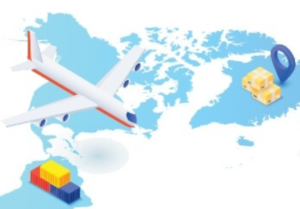
Door-to-door shipping
Re-understanding DDP—More Than Just a Term
The Essence of the Definition
DDP (Delivered Duty Paid) is the most comprehensive term in the International Chamber of Commerce’s Incoterms. Under this model, the seller assumes all risks, responsibilities, and costs until the goods reach the named destination, including not only international shipping and export clearance costs but also import clearance and all related taxes and duties. The buyer does not need to pay any additional fees after receiving the package.
In other words, when you choose DDP, you are promising your customers: “The price you see is the final price you pay; there are no hidden fees.” This transparency is invaluable in today’s e-commerce environment. Consumers’ tolerance for unexpected fees has plummeted; a survey showed that 68% of European consumers said they would permanently abandon a merchant if undisclosed additional fees appeared at checkout.
A Clear Differentiation from Other Terms
To understand the unique value of DDP, it needs to be examined within the full spectrum of logistical responsibility. At one end of the spectrum is EXW (Ex Works), where the seller simply prepares the goods, and the buyer handles everything else. At the other end is DDP, where the seller is responsible for the entire end-to-end process.
The key difference between DDP and the often confused DAP (Delivered at Destination) lies in the allocation of taxes and fees. Under the DAP (Direct-to-Pay) model, the seller is responsible for shipping and customs clearance in the destination country, but the buyer still needs to pay customs duties and VAT. This seemingly minor difference directly impacts the integrity of the customer experience and the merchant’s brand reputation.
Why DDP is the Inevitable Choice for Modern E-commerce
A Revolution in Customer Experience
In an era of information transparency, consumer expectations have reached unprecedented heights. They no longer accept “surprise fees” in cross-border shopping. The DDP model precisely addresses this need, encapsulating complex international logistics and tax issues in the merchant’s back-end, providing front-end customers with a seamless experience similar to domestic shopping.
This enhanced experience directly translates into business value. Merchants adopting DDP typically observe three significant changes: a 20-30% decrease in shopping cart abandonment, a 15-25% increase in customer satisfaction ratings, and a 10-15% increase in repurchase rates. When your German customers complete their purchases as if they were on a local e-commerce platform, their perception of your brand subtly changes—it’s no longer a distant international seller, but a reliable partner who understands local needs and respects consumer habits.
Strategic Advantages for Sellers
A New Dimension of Risk Control. In the traditional model, once goods leave the country of origin, sellers’ control over subsequent processes drops drastically. DDP, through a network of professional service providers, allows sellers to regain full visibility and control throughout the entire process. From the Chinese warehouse to the US customer, the status of each node is clearly visible.
Financial Forecasting Certainty. One of the biggest financial challenges in cross-border e-commerce is unpredictable additional costs. DDP converts most variable costs into fixed costs, allowing for more precise cash flow management. While the initial quote may be higher than regular logistics, it avoids the chain of losses caused by tax disputes after the goods arrive at the port.
Guarantee of Compliance. Global tax compliance requirements are becoming increasingly stringent. EU VAT reform, new customs regulations after Brexit, and strict scrutiny from US Customs… These complex regulations are handled by professional DDP service providers, allowing sellers to focus on their core business and avoid account freezes or legal risks due to tax non-compliance.
DDP Shipping
When is DDP Particularly Needed?
When you sell high-value goods (unit price above $150), target markets in Europe and the US with strict taxation, operate an independent website or high-end brand store, or your product category is on the customs sensitive list, DDP is not just an option, but a necessary business strategy. For small and medium-sized sellers, DDP allows you to access a logistics system that was originally only available to large enterprises at a reasonable cost.
The Real Operation of DDP – From Warehouse to Customer
A Transparent End-to-End Journey
The best way to understand the workings of DDP is through a concrete example. Suppose you are shipping a batch of smart home devices from Shenzhen to a customer in Amsterdam.
The journey begins at your warehouse. A professional DDP service provider will arrange pickup and guide you in preparing key documents: a commercial invoice detailing the product’s materials, uses, and value; an accurate packing list; and necessary product certification documents. The accuracy of these documents directly determines the smoothness of subsequent customs clearance.
The goods are shipped to Europe by air or sea. The choice at this stage is based on your time requirements and cost considerations. This is where the value of a professional service provider is demonstrated – they not only arrange transportation but also select the optimal solution for you based on their understanding of routes, available space, and seasonal factors.
When the goods arrive at the Port of Rotterdam, the real professional operation begins. The service provider uses its own EU tax number to handle customs clearance, accurately calculating the VAT and customs duties payable. This process requires in-depth local tax knowledge, such as: which products are eligible for lower tax rates, how to utilize the EU’s deferred tax policy, and how to correctly classify products to obtain the optimal tax rate. After customs clearance, the goods enter the local European logistics network. This could be DHL, DPD, or a local regional logistics company. Finally, when the courier delivers the package to the customer in Amsterdam, the customer requires no further action—the experience is exactly the same as their local e-commerce shopping experience.
Synchronous Management of Information Flow
The core technology of modern DDP services is a full-process tracking system. From pickup confirmation to final receipt, both the seller and the customer can view the status of the goods in real time. More importantly, notifications for key milestones—such as customs clearance completion, tax confirmation, and delivery arrangements—are sent automatically through the system, reducing errors and delays caused by human communication.
| Term | Full Name | Seller’s Responsibilities | Buyer’s Responsibilities | Ideal Use Cases |
| DDP | Delivered Duty Paid | Full responsibility (export clearance, international shipping, destination customs clearance, payment of all taxes/duties, final delivery) | Only receive the goods | Sellers focused on customer experience, high-value goods, or independent brand stores |
| DAP | Delivered at Place | Deliver goods to named place, handle export and destination clearance (without paying taxes/duties) | Pay import taxes/duties and bear risk after clearance | Sellers wanting partial control while leaving tax payment to buyers |
| DDU | Delivered Duty Unpaid | Same as DAP, but customs clearance may also be buyer’s responsibility | Pay all taxes/duties and possibly handle customs clearance | Situations where buyers clearly understand and accept tax responsibilities |
| EXW | Ex Works | Only make goods available at own premises | Handle all transportation, clearance, taxes, and risks | Large buyers or those with full international logistics capabilities |
A Rational View of DDP—Cost, Risk, and Choice
The Complete Cost Structure
The transparency of DDP fees is one of its core advantages. A professional DDP quote typically includes four clear parts: base international shipping costs (based on weight, volume, and channel), all statutory taxes and fees at the destination, professional customs clearance service fees, and local delivery fees. Reputable service providers will provide detailed tax calculations and even explain the legal basis for applicable tax rates.
It’s particularly noteworthy that DDP’s “total price includes” feature makes it easily comparable to the traditional “shipping + unknown taxes” model. While DDP’s initial quote may be 15-25% higher, its overall cost-effectiveness is often more pronounced when you factor in potential return losses, customer service costs, and brand reputation damage under the traditional model.
Risk Identification and Management
Every logistics solution has its specific risks, and DDP is no exception. Common challenges include: tax discrepancies due to product classification errors, delays caused by changes in destination policies, and delivery failures due to incorrect customer addresses.
Mitigating these risks relies on the service provider’s expertise. Characteristics of excellent service providers include: possessing their own tax ID and customs clearance team in the destination country, establishing long-term and stable local partnerships, maintaining a comprehensive product classification database, and providing clear risk response plans. For example, in the event of customs inspection, a professional service provider should be able to respond and handle the situation quickly, rather than simply passing the problem back to the seller.
This is the fundamental transformation brought about by DDP: from passively responding to problems to proactively creating value; from a cost center for logistics to a competitive advantage in experience. In this sense, choosing DDP means choosing a more professional and sustainable path to internationalization.
DDPFORWORLD-Professional freight forwarder in China
DDP for World is a full-service and shipping forwarder dedicated to assisting our clients in focusing and growing their businesses. We do DDP shipping since 2015 by handling home décor, Pet products, battery, power banks, DG cargo, general cargo and Amazon FBA forwarding service. We make your shipping easier and faster by Sea, Air, Express, Truck or Railway. If you have any questions or needs about freight forwarders, please feel free to contact us, we will serve you wholeheartedly.

 Email: info@ddpforworld.com
