Email:info@ddpforworld.com
  Opening:Available 24/7



In the booming global cross-border e-commerce landscape, millions of parcels are shipped from China to all parts of the world every day. Although these parcels are not expensive, they form the foundation of the cross-border e-commerce ecosystem. Traditionally, it’s believed that DDP (Delivered Duty Paid) service is primarily suitable for high-value goods, and “not worthwhile” or “uneconomical” for small parcels. However, the reality is profoundly changing.
1. Three Common Misconceptions about DDP for Small Parcels
Misconception 1: “Too High Costs, Not Worth It”
Many sellers believe that small parcels have low value, and using the DDP model will lead to excessively high logistics costs. In fact, with the technological optimization and large-scale operation of professional logistics service providers, the unit cost of DDP for small parcels has significantly decreased. More importantly, this calculation often ignores hidden costs: customer loss due to customs issues, negative reviews, return processing costs, and time loss.
For a product worth $30, traditional postal parcel shipping costs about $3-5, but if a customs dispute occurs, the seller may need to spend hours handling customer service issues, and may even face a full refund. Using a professional small parcel DDP solution might cost only $8-10 in total, but it guarantees 100% smooth delivery and customer satisfaction.
Misconception 2: “Complex Process, Difficult Operation”
Small parcel sellers often have streamlined teams and worry that the DDP process is too complicated. In reality, modern small parcel DDP services are highly standardized and automated. From order placement to customs declaration generation and tracking, the entire process can be completed on a unified platform. Professional service providers, such as DDPforWorld, have developed simplified processes for small parcels: sellers only need to prepare the goods as usual, and the system can automatically handle the rest.
Misconception 3: “Low-Value Goods are Tax-Free, No Need for DDP”
This is the most misleading misconception. While many countries have low-value import tax exemption thresholds (e.g., $800 in the US, €150 in the EU), this does not mean all small parcels are automatically tax-free. Different product categories have different tariff policies, and VAT/excise tax regulations also vary. More importantly, even if the conditions for tax exemption are met, formal customs declaration procedures still need to be completed. Many postal parcels, lacking proper declaration, are effectively in a “gray clearance” state, posing significant long-term risks.

DDP for World Logistics
2. Technological Innovation and Model Innovation of Small Parcel DDP
Innovative Application of Bulk Declaration Mechanisms
In the small parcel DDP sector, the most groundbreaking development is undoubtedly the practical application of bulk declaration mechanisms. Previously, the model of clearing each parcel individually proved inefficient and costly when handling large quantities of low-value goods. Now, advanced service providers have re-engineered the declaration process, enabling the combined declaration of multiple small parcels destined for the same destination in the same batch.
This bulk declaration is not simply a matter of quantity accumulation, but rather based on a deep understanding of commodity attributes, declaration elements, and customs rules. Service providers have developed intelligent classification systems that automatically identify parcel contents and group them appropriately according to customs-approved classification principles. In practice, service providers communicate with customs in advance to ensure the compliance and smoothness of bulk declarations.
Refined Improvement of Tax Processing Procedures
Another challenge facing small parcel DDP is optimizing tax processing procedures while complying with the tax laws of various countries. Professional service providers have developed a tiered tax management strategy based on practice, employing differentiated processing methods according to parcel value and commodity category.
For parcels with extremely low value that meet tax exemption criteria, the system automatically identifies and generates simplified declaration documents, avoiding unnecessary tax operations. For parcels requiring tax payment, a combination of pre-payment and actual payment is used. Service providers pre-calculate taxes based on historical data and real-time tax rates and pay them during customs clearance, later adjusting for overpayments or underpayments based on the official customs invoice. This flexible approach ensures both customs clearance efficiency and tax accuracy.
Design of Risk Diversification Mechanisms
The customs risks faced by small parcel DDP shipments cannot be ignored. Professional service providers design risk diversification mechanisms to control potential risks within acceptable limits.
They establish a customs compliance database, recording the latest policies and enforcement priorities of customs authorities in various countries. Based on the risk assessment results, appropriate declaration strategies are adopted for different types of parcels. For sensitive goods or high-value parcels, additional manual review is conducted; for regular goods, a standardized fast-track process is used. Simultaneously, service providers collaborate with multiple customs agents to avoid systemic risks that might arise from relying on a single channel. This multi-layered risk management system ensures the stability and reliability of the small parcel DDP service.
Cost Control Technology Innovation
Cost control is a key factor in the widespread adoption of small parcel DDP. Service providers have optimized costs at multiple stages through technological innovation.
In the transportation stage, intelligent loading algorithms are used to automatically select the optimal packaging and transportation method based on parcel size and weight. In the customs clearance stage, optimized declarations reduce tax expenses while improving clearance efficiency and reducing time costs. Technically, lightweight system interfaces have been developed to lower seller integration costs. These technological innovations work together to make the overall cost of small parcel DDP competitive with traditional methods.
Establishment of a Standardized Service System
The large-scale development of small parcel DDP requires unified service standards. Leading companies in the industry have begun to establish a comprehensive service standard system covering the entire process from pickup to delivery.
This system establishes unified standards across multiple dimensions, including operational procedures, timeliness criteria, information specifications, and anomaly handling. All service process (service links/steps) are equipped with clear quality requirements and operational guidelines to ensure service consistency across different regions and teams. Simultaneously, by establishing a service quality monitoring mechanism, the system can track the completion of key indicators in real time, promptly identifying and optimizing weaknesses in the service. This standardized system lays the institutional foundation for the stable and continuous improvement of small parcel DDP service quality.
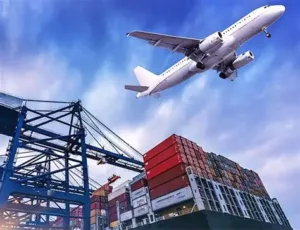
DDP shipping
3. Specific Paths for Compliant Export of Low-Value Goods
Path 1: Professional Small Parcel DDP Line
This is the most suitable solution for the vast majority of small and medium-sized sellers. Professional logistics providers offer door-to-door DDP (Delivered Duty Paid) services for small parcels, featuring the following characteristics:
Weight Range: Typically 0-5 kg, covering most small commodities.
- Pricing Structure: Transparent pricing using a first-weight + additional-weight model.
- Delivery Time Guarantee: Usually 5-12 business days to major cities in Europe and America.
- Service Integration: Includes the entire process from pickup, customs declaration, customs clearance, tax payment, to delivery.
For example, DDPforWorld provides sellers with a unique tracking number and complete tax documentation for each parcel, ensuring full compliance.
Path 2: Enhanced DDP Solution via Postal Channels
Traditional postal channels are also beginning to offer DDP options. Compared to regular postal parcels, this solution adds pre-payment tax services to the existing postal network. Sellers pay estimated taxes upon shipment, and the postal company handles customs clearance and tax payment at the destination. This method combines the extensive coverage of the postal network with the tax payment advantages of DDP, making it suitable for delivery to remote areas.
Path 3: Integration Solution with Cross-Border E-commerce Platforms
Now, major platforms like Amazon and eBay have packaged the complex DDP (Delivered Duty Paid) service into a simple “tax included” option. Sellers simply click a button, and the platform and logistics partners handle all the subsequent steps. This certainly saves sellers a lot of trouble, but the whole process is also like an assembly line, relatively fixed, and not very adaptable to individual needs.
SPS DDP vs. Traditional Postal: Core Comparison
| Dimension | Professional SPS DDP Service | Traditional Postal Service | Key Takeaway |
| Total Cost | Higher (approx. $8-12, tax included) | Lower (approx. $3-6, freight only) | DDP offers a transparent, all-in price; postal only covers freight, with duties and taxes billed separately to the buyer. |
| Clearance & Taxes | Handled by provider, 100% compliant, pre-paid | Responsibility of the buyer, payable upon inspection (if selected) | The core value of DDP: turns unpredictable duty costs into a fixed, manageable expense. |
| Operational Risk | Very Low | Very High | Postal services carry hidden costs: customer service hours, refunds, and negative reviews due to customs issues. |
| Customer Experience | Excellent | Poor | With DDP, the buyer receives the parcel with no extra steps or surprise fees, leading to higher satisfaction and repeat purchases. |
| Compliance & Data | Full commercial invoice and tax records | No formal trade documentation | DDP builds a compliant trade history, essential for sustainable cross-border business. |
| Recommended Use Case | Core markets (e.g., EU, US), higher-value items, key product lines | Test orders or shipments to markets with minimal duty risk | Use DDP to protect and scale your core business; use postal services for complementary scenarios. |
4. Cost-Benefit Analysis and Scenario Selection
Detailed Cost Breakdown
The total cost of DDP (Delivered by Payment) for small parcels typically includes:
- Base Shipping Costs: Calculated based on weight and size
- Handling Fees: A fixed fee per shipment, covering document processing and handling costs
- Taxes: Actual customs duties and VAT calculated based on destination and product category
- Customs Clearance Fees: Professional customs clearance service fees
Gradual Implementation Strategy
For sellers concerned about costs and operational complexity, a gradual implementation strategy is recommended:
Phase 1: Select 20% of high-value or dispute-prone orders to trial DDP.
Phase 2: Based on the trial results, expand DDP to specific markets (e.g., Germany, France).
Phase 3: Fully implement Small Parcel DDP in all major markets.
Small parcel direct-dumping (DDP) is not a cost burden, but a value investment; not a cumbersome operation, but a simplified solution; not a future option, but a present necessity. In today’s era of “experience competition” in global e-commerce, each small parcel is no longer merely a carrier of goods, but also a transmitter of brand promises, a builder of customer relationships, and a creator of long-term value.
For sellers currently struggling with small parcel logistics, now is the perfect time to rethink and replan. Start with the smallest parcel to build the most solid compliance foundation; begin with the lowest value to create the highest customer experience. This may be the key to success in the new era of cross-border e-commerce—not about selling at the lowest price, but about delivering perfectly.
DDPFORWORLD-Professional freight forwarder in China
DDP for World is a full-service and shipping forwarder dedicated to assisting our clients in focusing and growing their businesses. We do DDP shipping since 2015 by handling home décor, Pet products, battery, power banks, DG cargo, general cargo and Amazon FBA forwarding service. We make your shipping easier and faster by Sea, Air, Express, Truck or Railway. If you have any questions or needs about freight forwarders, please feel free to contact us, we will serve you wholeheartedly.

 Email: info@ddpforworld.com