 Email:info@ddpforworld.com
  Opening:Available 24/7



For businesses engaged in Sino-Canadian trade or e-commerce, exporting large or bulk goods can often seem daunting. Complex procedures, high costs, and unpredictable risks at every step can become significant obstacles. If you are facing this challenge, opting for DDP FCL (Full Container Load) sea shipping from China to Canada may be the optimal solution for achieving cost control, process simplification, and risk reduction.
This article will break down each step of this logistics path for you, from core concepts to practical operations, helping you master the export of large cargo with ease.
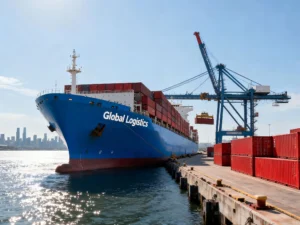
DDP Shipping by sea
1. Why is DDP + FCL the Preferred Combination for Exporting Bulk Cargo to Canada?
Before diving into the process, it’s essential to understand why combining DDP (Delivered Duty Paid) and FCL (Full Container Load) is a powerful strategy for bulk cargo exports.
DDP (Delivered Duty Paid) is an international trade term. Under this model, your responsibilities and risks as the shipper are significantly extended. Your freight forwarding agent (such as DDP FOR WORLD) takes charge of the entire process—from pickup at the Chinese factory to customs clearance and final delivery to the destination warehouse in Canada—including all transportation, customs declaration, and tax payment procedures. You only need to provide cargo details and the delivery address to receive end-to-end transparent services under a single contract and total cost.
FCL (Full Container Load) refers to shipping a full standard container (or multiple containers). For large goods (such as furniture, machinery, or bulk building materials) or large volumes of e-commerce products, FCL offers distinct advantages over LCL (Less than Container Load):
- Higher Security: Goods occupy the container exclusively, avoiding mixing with other shippers’ cargo and reducing the risk of damage or confusion during loading/unloading.
- More Predictable Timing: No waiting for consolidation or deconsolidation; direct port-to-port transit ensures more reliable overall shipping times.
- Cost-Effective: For large or high-volume cargo, the per-unit cost of FCL is often lower than LCL, and there are no potential LCL handling or storage fees.
- Simplified Process: Separate customs declaration with clear documentation, and the entire container is managed and tracked as a single unit.
Combining DDP and FCL means outsourcing the most complex aspects of bulk cargo export—international logistics, cross-border customs clearance, and tax payments—to a reliable DDP freight forwarder. This allows you to focus on your core business while leaving the logistics challenges to the experts.
2. Complete Process Breakdown: DDP FCL Sea Shipping from China to Canada (Simplified 16-Step Version)
A professional DDP service provider (as outlined on the referenced website) typically breaks down the process into over a dozen traceable steps. For clarity, we’ve condensed them into four key phases:
Phase 1: Pre-Shipment Preparation & Booking (Steps 1–7)
This phase focuses on “confirmation”—ensuring clarity about the cargo, pricing, and plan.
- Inquiry & Quotation: Provide detailed cargo information (description, material, dimensions, weight, value), port of origin (e.g., Shenzhen, Shanghai, Ningbo), and the full delivery address in Canada. The forwarder will propose the optimal route and calculate the all-inclusive DDP cost.
- Confirmation & Booking: Accept the quote, sign the contract, pay the deposit, and the forwarder will book container space with the shipping line.
- Cargo Pickup & Consolidation: Based on your trade terms (e.g., EXW, Ex-Works), the forwarder arranges trucking to pick up the goods from the designated factory and transport them to their consolidation warehouse at the port of origin (e.g., Shenzhen).
- Warehousing & Pre-Loading Inspection: After the goods arrive at the warehouse, they are professionally measured and weighed, and a “Check-in Report” is issued for your verification. This step is critical for ensuring accurate customs data and avoiding disputes at the destination.
- Loading Preparation: Customized packaging is arranged based on cargo characteristics (e.g., palletizing, reinforcement) or specific requirements (e.g., Amazon FBA inbound guidelines).
- Export Customs Declaration: The forwarder prepares all required export documents (e.g., Packing List, Commercial Invoice, Contract) and completes the export customs clearance process in China using their own license.
- Container Loading & Sealing: Under customs supervision, the goods are loaded into the container, a seal is applied, and photos/videos are taken as proof. The container is then transported to the port for loading onto the vessel.
Phase 2: International Ocean Transport & Document Flow (Steps 8–10)
While the cargo is on its trans-Pacific journey, document preparation proceeds in parallel.
- Ocean Transportation: The container is loaded onto the booked liner vessel, sailing from major Chinese ports (e.g., Shanghai, Ningbo) to major Canadian ports (e.g., Vancouver, Toronto). Typical transit times are approximately 14–20 days for West Coast routes and 25–35 days for East Coast routes via the West Coast or Panama Canal.
- Bill of Lading (BL) Handling: The shipping line issues the Bill of Lading. Under DDP terms, a Telex Release (Sea Waybill)is commonly used, allowing the forwarder to retain control of the cargo to expedite pickup at the destination port.
- Pre-Clearance Document Preparation: The forwarder’s Canadian partner or branch uses copies of the shipping documents to prepare the necessary import clearance documents for Canada Border Services Agency (CBSA) in advance.
Phase 3: Canadian Import Customs Clearance & Cargo Pickup (Steps 11–14)
This phase highlights the core value of DDP, where the forwarder handles all complexities.
- Port Arrival & Document Exchange: Upon arrival at the Canadian port, the forwarder exchanges the telex release for the Delivery Order.
- Duty & Tax Payment: This is the essence of DDP. Acting as the Importer of Record, the forwarder uses your cargo information to calculate and pay all applicable customs duties, Goods and Services Tax (GST/HST), and any other potential provincial taxes on your behalf.
- Canadian Customs Inspection (if applicable): If selected for inspection by CBSA, the forwarder coordinates the process and covers associated delays and costs (usually factored into the risk assessment).
- Clearance Completion & Container Pickup: Once cleared, the forwarder arranges for a truck to pick up the container from the port terminal.
Phase 4: Inland Transportation & Final Delivery at Destination (Steps 15–16)
The final step ensures the cargo reaches you safely.
- Inland Transportation & De-stuffing: The container is transported by truck or rail to the final destination warehouse or address, where it is safely unloaded and unpacked.
- Empty Container Return & Cargo Receipt: The empty container is cleaned and returned to the designated depot. You sign for the goods, completing the DDP process.
DDP FCL Sea Shipping from China to Canada
3. Key Considerations & Cost Breakdown Table
Core Considerations:
- Product Compliance is Paramount: Ensure your goods comply with Canadian safety standards, labeling requirements, and environmental regulations(e.g., CSA/UL certification for electronics, flame-retardant standards for furniture). While a DDP forwarder can advise, compliance remains the shipper’s responsibility.
- Accurate Declaration is Foundational: Honest and precise declarationof the cargo’s description, material, purpose, and value is essential for smooth clearance and correct tax assessment. Misdeclaration can lead to heavy fines, cargo seizures, or legal consequences.
- Insurance is Non-Negotiable: Although shipping lines have liability limits, purchasing comprehensive marine cargo insurancecovering warehouse-to-warehouse transit is the most cost-effective way to protect against unexpected losses (e.g., general average, theft, damage).
DDP FCL Sea Shipping Cost Breakdown Table:
| Cost Category | Description & Coverage | Payer (Under DDP Terms) |
| Origin Local Charges | Pickup fees, domestic transportation, warehousing/handling, export customs declaration fees, documentation fees, Terminal Handling Charges (THC), etc. | Included in the all-in DDP quote, packaged by the forwarder. |
| Ocean Freight | Vessel transportation cost from the Chinese port of loading to the Canadian port of discharge, typically quoted per container (e.g., 40HQ). | Included in the all-in DDP quote. |
| Destination Duties & Taxes | Customs duties (based on HS code, origin, value) and nationwide Goods and Services Tax (GST/HST) levied by CBSA. | Core of DDP: Calculated and paid on your behalf by the forwarder; cost is included in the total quote. |
| Destination Port Charges | Port handling fees, de-stuffing charges, documentation fees, container deposit, etc. | Included in the all-in DDP quote. |
| Destination Inland Transportation | Truck or rail freight from the Canadian port to the final delivery address. | Included in the all-in DDP quote. |
| Other Potential Costs | Customs inspection fees (if incurred), demurrage/detention charges (if delay is caused by the consignee), special handling fees (for non-standard cargo), insurance premiums (highly recommended as an add-on). | Inspection fees are often included; demurrage etc. are borne as incurred; insurance is an optional extra. |
4.Actionable Advice for Shippers
Plan Ahead: Initiate communication with your DDP forwarder at least 3–4 weeks in advance to allow sufficient time for production, cargo preparation, and booking, especially during peak seasons (e.g., before holidays).
Prepare Documentation Thoroughly: Have accurate Commercial Invoices, Packing Lists, and product composition/material descriptions ready in advance. Obtain a Certificate of Origin if beneficial for preferential tariff rates.
Communicate Clearly: Confirm the “all-inclusive” scope of the DDP quote with your forwarder. Understand what is definitively covered and what is excluded to avoid disputes later.
Track & Communicate: Use the tracking system or regular updates provided by your forwarder to monitor the shipment’s progress. Maintain open communication and promptly report any changes.
In summary, DDP FCL sea shipping from China to Canada creates an efficient, hassle-free, and controllable pathway for exporting bulk goods by outsourcing complex international logistics and customs formalities to professionals. The key to success lies in choosing a transparent and reliable partner—like DDP FOR WORLD—with proven expertise in China-Canada operations and thorough knowledge of both countries’ regulations, and collaborating with them openly and in detail.
DDP FCL Sea Shipping from China to Canada
DDPFORWORLD-Professional freight forwarder in China
DDP for World is a full-service and shipping forwarder dedicated to assisting our clients in focusing and growing their businesses. We do DDP shipping since 2015 by handling home décor, Pet products, battery, power banks, DG cargo, general cargo and Amazon FBA forwarding service. We make your shipping easier and faster by Sea, Air, Express, Truck or Railway. If you have any questions or needs about freight forwarders, please feel free to contact us, we will serve you wholeheartedly.

 Email: info@ddpforworld.com
