 Email:info@ddpforworld.com
  Opening:Available 24/7



As global supply chains continue to evolve, Delivered Duty Paid (DDP) logistics is becoming a key solution in cross-border trade. For companies entering the US market, understanding the entire DDP ocean and air freight door-to-door service process is not only crucial for cost reduction but also essential for improving supply chain efficiency. DDPFORWORLD, as a professional DDP logistics service provider, is committed to providing customers with transparent and reliable one-stop logistics solutions. This article will provide a detailed analysis of the pricing structure, expected delivery time, and operational process for US DDP ocean and air freight door-to-door services in 2026, helping you confidently address cross-border logistics challenges.

US DDP
1.What is DDP Door-to-Door Logistics?
DDP (Delivered Duty Paid) is an international trade term meaning that the seller assumes all risks and costs associated with transporting goods to their destination, including customs clearance, duties, and local delivery. For the US market, DDP door-to-door service means a complete service from shipment in China or another shipping location until the goods are delivered to the consignee’s warehouse in the US. This model greatly simplifies the buyer’s logistical burden, making it particularly suitable for e-commerce sellers, SMEs, and large manufacturers.
With anticipated adjustments to US customs regulations in 2026, the DDP model will place greater emphasis on compliance and transparency. Choosing DDP services not only helps businesses avoid customs clearance delays but also allows for more precise control over total costs.
2.DDP Sea Freight vs. Air Freight Door-to-Door: How to Choose?
Sea freight and air freight are the two main modes of DDP door-to-door service, each with its own advantages and disadvantages:
DDP Sea Freight Door-to-Door: Suitable for large-volume, time-sensitive shipments. Sea freight is typically divided into Full Container Load (FCL) and Less than Container Load (LCL), offering low cost and large capacity, but with longer transit times. In 2026, with the optimization of global shipping networks, sea freight transit times are expected to improve further.
DDP Air Freight Door-to-Door: Suitable for high-value, urgent shipments. Air freight is fast, significantly shortening supply chain cycles, but with higher costs. In 2026, advancements in air freight technology may lead to more flexible route options.
The following is a comprehensive comparison of the two methods:
| Comparison Dimension | DDP Ocean Freight Door-to-Door | DDP Air Freight Door-to-Door |
| Transit Time | 25-40 days (depending on U.S. destination) | 5-10 days (including customs clearance and delivery) |
| Cost Structure | Lower (suitable for bulk cargo) | Higher (suitable for small batches of urgent goods) |
| Cargo Type | Bulk commodities, durable goods, low time-sensitivity products | Electronics, samples, emergency restocking, high-value items |
| 2026 Trend | Green shipping and enhanced digital tracking | Automation in air cargo and optimized duty pre-clearance |
| Recommended Scenario | Seasonal stockpiling, long-term supply chain planning | Rapid market response, urgent inventory turnover |
3.DDP Logistics Trends and Optimization Suggestions for 2026
As global supply chains undergo digital and sustainable development transformations, U.S. DDP logistics in 2026 will enter a new phase centered on intelligence, compliance, and flexibility. Companies that can anticipate trends and optimize their strategies in advance will be better positioned to control costs, improve efficiency, and mitigate risks. Below are the key trends and targeted recommendations for the coming year.
3.1. Major Development Trends
- End-to-End Visibility and Data-Driven Decision-Making: The deep integration of Internet of Things (IoT) sensors and blockchain technology will enable real-time, full-chain visibilityfrom factory dispatch, in-transit movement, port clearance, to final delivery. Customers will no longer merely track container or flight numbers but will be able to monitor real-time conditions such as temperature, humidity, vibration, and customs processing status. Data will become the core basis for predicting delays and optimizing inventory.
- Automation and Intelligence in Compliance Processes: In response to increasingly complex regulations from U.S. Customs and Border Protection (CBP) and other regulatory bodies (e.g., FDA, EPA), the application of artificial intelligence (AI) and machine learning (ML) tools will become standard. These systems can automatically classify Harmonized Tariff Schedule (HTSUS) codes, pre-screen declaration documents, calculate estimated duties and taxes, and flag potential compliance risks, thereby significantly reducing human errors and customs clearance delays.
- Green Logistics as a Balance Between Cost and Brand Value: Environmental regulations and customer preferences will jointly drive the development of green logistics. In ocean freight, selecting low-carbon fuel routes and optimizing sailing schedules to reduce carbon emissionswill become important options. For air freight, greater emphasis will be placed on the use of Sustainable Aviation Fuel (SAF). Additionally, “green channels” and environmental certifications may offer tariff incentives or expedited clearance, transforming green logistics from a cost item into a strategic investment.
- Widespread Adoption of Flexible and Hybrid Supply Chain Models: Geopolitical and market demand uncertainties will push companies to move away from single transportation modes. Adopting a hybrid logistics strategy of “ocean freight as the primary mode + air freight for emergencies”will become standard practice. By dynamically adjusting transportation combinations, companies can ensure cost-effectiveness for most inventory while providing rapid replenishment channels for urgent orders or best-selling products.
3.2. Optimization Suggestions for Businesses
- Deepen Data Integration with Logistics Partners: Choose service providers like DDPFORWORLD that offer open API interfaces or digital dashboards. Proactively integrate real-time logistics data into your own ERP or supply chain management systems to link inventory forecasting, production planning, and in-transit goods, building a more agile supply chain response system.
- Advance Compliance Pre-screening and Product Filing: In light of potential updates to product准入 requirements in 2026, collaborate with your DDP service provider to complete certification filings for key products (e.g., FDA, FCC, DOT)in advance. Utilize the provider’s automated compliance tools for pre-screening to ensure all product descriptions, material statements, and certificates of origin are accurate and complete before shipment, aiming for “zero-clearance surprises.”
- Utilize Nearshoring Warehousing and Distribution Networks: To address rising costs and delivery time pressures of the “last mile” in the U.S., consider leveraging your service provider’s distribution centers near major ports such as Los Angeles and New York. Bulk shipments can be sent via ocean freight to these forward-deployed warehouses, enabling local rapid distribution based on orders. This model can significantly shorten final delivery times and reduce last-mile logistics costs.
- Implement Dynamic Logistics Cost Analysis: Establish a Total Cost of Ownership (TCO) model that includes all hidden costs (e.g., peak season surcharges, inspection storage fees, remote area delivery fees). Regularly use data tables to compare the actual door-to-door costs and transit times of different providers, routes, and transportation combinations—rather than just comparing base freight rates—to make the most cost-effective long-term decisions.
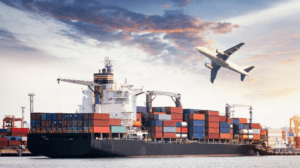
DDP shipping by sea
4.Comprehensive Analysis of the DDP Door-to-Door Operation Process
DDP door-to-door service is a complex, highly coordinated process where each link is interconnected. Its core lies in the service provider assuming all responsibilities and risks at the destination on behalf of the shipper. A clear understanding of each stage is fundamental for efficient collaboration between businesses and logistics providers, ensuring smooth cargo delivery. Below is a detailed analysis of DDPFORWORLD’s standard end-to-end operation process.
4.1 Process Initiation and Preparation Phase
- Consultation and Customized Solutions: The client provides detailed cargo information (including product description, HS code, material, value, volume/weight, destination ZIP code, etc.). Based on 2026 market capacity, route conditions, and tariff policies, the service provider issues a transparent quotation covering all estimated costs (ALL-IN COST) and transit times, confirming service details.
- Booking and Pickup Arrangement: Upon confirmation of the assignment, the service provider arranges ocean containers (FCL or LCL) or air freight space based on cargo volume. Simultaneously, domestic logistics are coordinated to the port of loading warehouse for professional container loading/palletizing, with photos or videos provided as proof, ensuring safe and compliant cargo stowage.
4.2. International Transport and Core Customs Clearance Phase
- Export Customs Declaration and Mainline International Transport: Export customs clearance procedures are completed at the Chinese port of loading. The cargo then enters the mainline international transport phase—shipped via ocean or air directly to the designated U.S. port of entry (e.g., Port of Los Angeles/Long Beach LA/LB, Chicago O’Hare Airport ORD). Clients can track vessel/flight status in real-time via a dedicated tracking link.
- S. Arrival and Core DDP Customs Clearance Operations: Upon arrival at the U.S. port, the service provider’s designated local U.S. customs broker handles import clearance in the name of the consignee (typically the service provider’s U.S. entity). This core phase includes:
- Submitting complete import declaration documents (ISF, Entry, etc.) to U.S. Customs (CBP).
- Calculating and paying all applicable duties, taxes, and customs fees on behalf of the shipper.
- Coordinating any potential inspections and providing required documents or explanations.
- Arranging the transfer of cargo from the port/airport to an inland bonded facility (if required).
4.3. Final Delivery and Completion Phase
- Destination Pickup and Inland Transportation: After customs release, the service provider arranges for truck or rail to move the container from the terminal to a nearby warehouse (for LCL cargo, deconsolidation and sorting occur). Subsequently, domestic U.S. trucking (FTL or LTL)is arranged based on the final destination address.
- Final Delivery and Proof of Delivery Closure: The truck driver delivers the cargo to the consignee’s specified warehouse, store, or address. The consignee signs for receipt after verifying the external packaging is intact. The service provider provides the Proof of Delivery (POD)as final confirmation of logistics completion to the client and settles all actual incurred costs, closing the entire door-to-door loop.
4.4. Key Support and Exception Handling
- End-to-End Documentation Management and Communication: The service provider is responsible for coordinating the preparation, review, and transmission of all required documents, including commercial invoices, packing lists, bills of lading/air waybills, and certificates of origin, ensuring consistency across all paperwork.
- Contingency Planning for Exceptions: For exceptional situations such as customs inspections, weather delays, or transport incidents, professional DDP service providers (like DDPFORWORLD) activate contingency plans, immediately notifying the client, coordinating resources for swift resolution, and clarifying liability and responsibility for any additional coststo protect the client’s interests.
2026 US DDP Sea/Air Freight Door-to-Door Service
DDPFORWORLD-Professional freight forwarder in China
DDP for World is a full-service and shipping forwarder dedicated to assisting our clients in focusing and growing their businesses. We do DDP shipping since 2015 by handling home décor, Pet products, battery, power banks, DG cargo, general cargo and Amazon FBA forwarding service. We make your shipping easier and faster by Sea, Air, Express, Truck or Railway. If you have any questions or needs about freight forwarders, please feel free to contact us, we will serve you wholeheartedly.

 Email: info@ddpforworld.com
